Indiana Arrest Expungement: How to Clear Charges That Were Dismissed
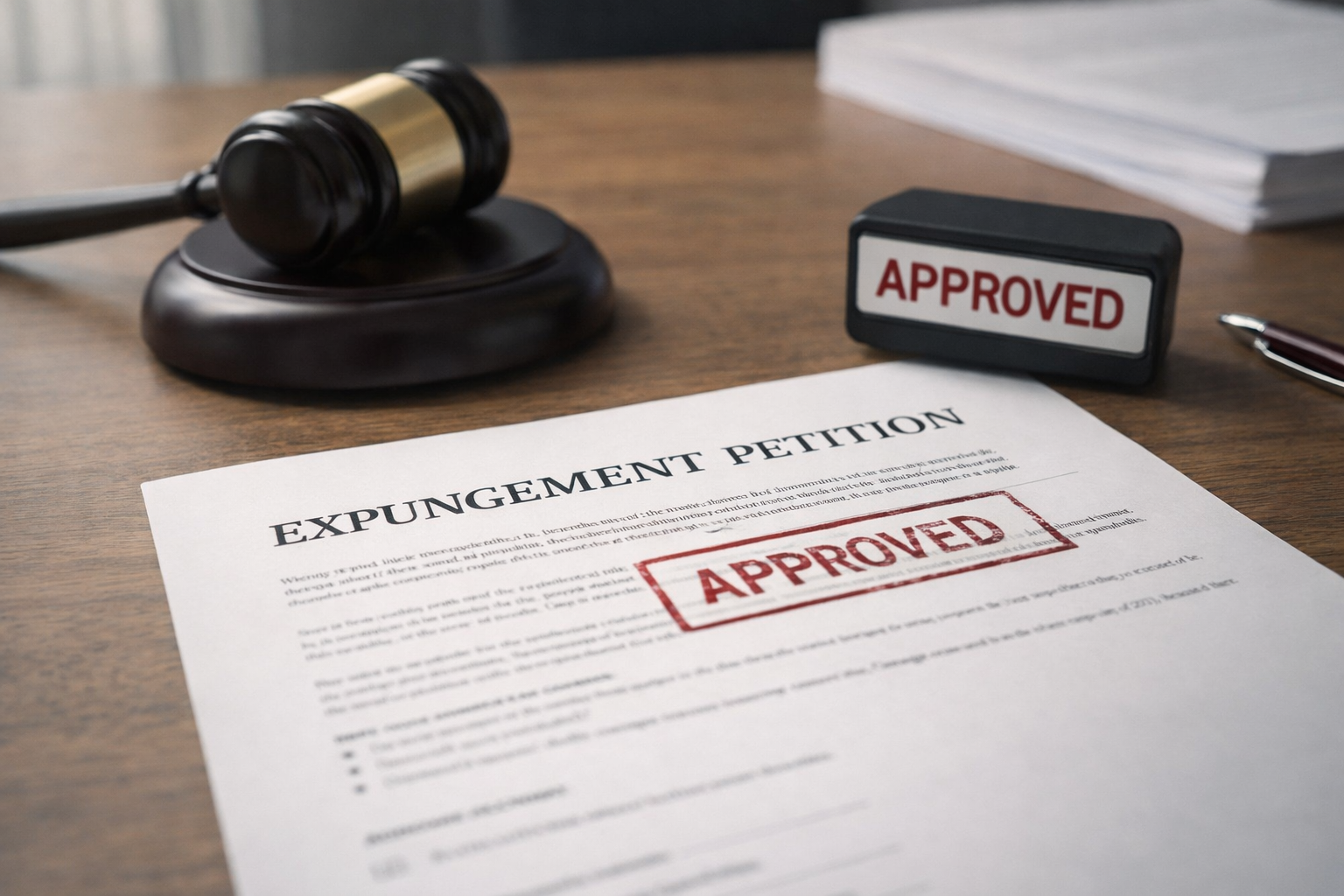
An arrest without a conviction can follow you for years, appearing on background checks and affecting employment, housing, and professional opportunities. Under Indiana's Second Chance Law (Indiana Code 35-38-9), you may be eligible to expunge certain arrest records—even if charges were dismissed or you were never formally charged.
This guide explains who qualifies, how the process works, and the steps you need to take to clear your record under Indiana law.
Understanding Indiana's Expungement Law for Arrests
Indiana Code 35-38-9-1 permits expungement of arrest records when no conviction resulted. This applies if:
You were arrested but never charged
Criminal charges were filed but later dismissed
You were acquitted at trial
Your conviction was vacated on appeal
The arrest resulted only in an infraction (not a criminal conviction)
Expungement under this section seals or removes your arrest record from public databases, state repositories, and court files. Once granted, the arrest is treated as though it never occurred for most purposes.
Arrest Records vs. Conviction Records: Key Differences
Indiana law treats arrest expungement differently from conviction expungement:
Arrest Records (IC 35-38-9-1):
Records are permanently sealed or redacted
Information is removed from state criminal history databases
Court records are sealed from public access
Law enforcement retains sealed records for official duties only
Conviction Records (IC 35-38-9-2 through 9-5):
For certain felonies, records are only "marked as expunged" but remain visible to courts and prosecutors
More restrictive eligibility requirements apply
Longer waiting periods are required
Because arrest expungement provides stronger relief, it's critical to act if you qualify.
Waiting Periods: When Can You File?
Traditional Petition-Based Expungement
If your arrest did not result in a conviction, you may file a petition for expungement one (1) year after:
The date of arrest, criminal charge, or juvenile allegation (whichever is later), or
The date the opinion vacating your conviction becomes final (if a conviction was later overturned)
The prosecuting attorney may consent in writing to a shorter waiting period.
Important: If you're currently participating in a pretrial diversion program, you generally cannot file without written authorization from the prosecutor.
Automatic Expungement (Effective July 1, 2022)
Under IC 35-38-9-1(b), certain arrests are now automatically expunged without the need to file a petition:
Dismissals and Acquittals: If all criminal charges or juvenile allegations are dismissed, or you are acquitted at trial, the court must immediately order expungement. The order takes effect 60 days after dismissal or acquittal (unless the prosecutor successfully requests a delay of up to one year).
Non-Prosecution of Juveniles: If one year has passed since juvenile allegations were filed with no disposition and the state is not actively prosecuting, automatic expungement applies immediately.
Arrest Without Charges Filed (IC 35-38-9-1(c)): If you were arrested after June 30, 2022, and one year has passed with no charges filed, you may petition the court. Upon receipt, the judge must immediately order expungement of all arrest records.
Even with automatic expungement, it's wise to verify that all agencies have complied with the court's order.
The Step-by-Step Expungement Process in Indiana
Step 1: Gather Your Information
You'll need:
Date of arrest
County where the arrest occurred or charges were filed
Law enforcement agency involved
Court case number (if charges were filed)
Your Social Security number and driver's license number
Any aliases or other names you've used
Use MyCase.in.gov to look up case details if you don't have physical copies.
Step 2: Prepare Your Petition
A verified petition for expungement must be filed in the circuit or superior court in:
The county where criminal charges were filed, or
The county where the arrest occurred (if no charges were filed)
The petition must include all required information under IC 35-38-9-1(e). Indiana Legal Help (indianalegalhelp.org) provides free forms and instructions.
No filing fee is required for arrest expungement petitions under IC 35-38-9-1.
Step 3: Service on the Prosecutor
Unlike conviction expungements where the petitioner serves the prosecutor, the court is responsible for serving a copy of the petition on the prosecuting attorney in arrest expungement cases.
The prosecutor has 30 days to respond. If they fail to reply, they waive any objection.
Step 4: Court Decision
The court must grant the petition unless:
You have not met the statutory requirements
Criminal charges are pending against you
The court may summarily deny the petition if it's incomplete or if the facts show you're not entitled to relief.
If the prosecutor objects, the court will schedule a hearing no sooner than 60 days after service. You must prove eligibility by a preponderance of the evidence.
Step 5: Implementation of the Expungement Order
Once granted, the court order requires:
State Police and Law Enforcement Agencies: Remove all information from criminal history databases. Records may not be placed or retained in any alphabetically arranged system accessible to the public.
Court Records: All sentencing court, appellate court, and clerk records are permanently sealed or redacted.
Published Opinions: If your name appears in a published appellate opinion, it must be redacted from online databases (similar to juvenile cases).
Records are not destroyed—they remain available to courts and criminal justice agencies for official duties only.
Benefits of Expunging an Arrest Record
Employment and Housing
Under IC 35-38-9-10, it is unlawful discrimination to:
Refuse to employ someone
Deny housing or admission
Refuse to issue a professional license
Otherwise discriminate against someone based on an expunged arrest record
On applications, you may only be asked: "Have you ever been arrested for or convicted of a crime that has not been expunged by a court?"
You are legally entitled to answer "no."
Civil Rights and Legal Protections
Once expunged, you are treated as if the arrest never occurred. However:
Future criminal proceedings: If you are arrested or convicted of a new, unrelated offense, the expunged arrest may still be considered for sentencing purposes, habitual offender enhancements, or admitted as evidence.
Civil litigation: If you bring a lawsuit that could be defended using expunged records, the defendant is presumed to have a complete defense unless you prove the records wouldn't exonerate them.
Professional Licensing
An expunged arrest cannot be used as grounds to deny, suspend, or revoke a professional license. If you're applying for a state license or certification, expungement removes a significant barrier.
Common Pitfalls and Limitations
Pretrial Diversion: If you're currently in a diversion program, you may not file without prosecutor consent.
Pending Charges: You cannot seek expungement while criminal charges are pending.
Statute of Limitations: Expungement does not shorten the statute of limitations. Prosecutors may still file charges after expungement if within the statutory period.
No Time Limit on Petitions: There is no deadline for filing—you may seek expungement at any time after the waiting period.
Take the Next Step: Schedule a Consultation
If you have an arrest on your record in Indiana, expungement may be available to help you move forward. The process involves strict legal requirements, court filings, and coordination with prosecutors and law enforcement agencies.
An experienced Indiana expungement attorney can:
Verify your eligibility under IC 35-38-9-1
Prepare and file the petition with the correct court
Ensure all statutory requirements are met
Represent you at any hearing
Confirm that all agencies comply with the expungement order
Call or text (317) 759-3225 to schedule a consultation, or use the appointment scheduler below to find a time that works for you.
Clearing your record is a legal right—make sure it's done correctly.




Reading about the problem is one thing. Dealing with it is another.
If this issue is affecting you, your family, your case, or your career, the next step is understanding how the law applies to the facts in front of you. Tell us what is happening and Vining Legal can help you determine what needs attention next.
We personally respond within 2 hours, 8am–8pm, seven days a week.
Vining Legal · Indianapolis, Indiana
Family Law · DCS · Criminal Defense · Appeals
