Can a Felony Be Reduced to a Misdemeanor and Then Expunged in Indiana?
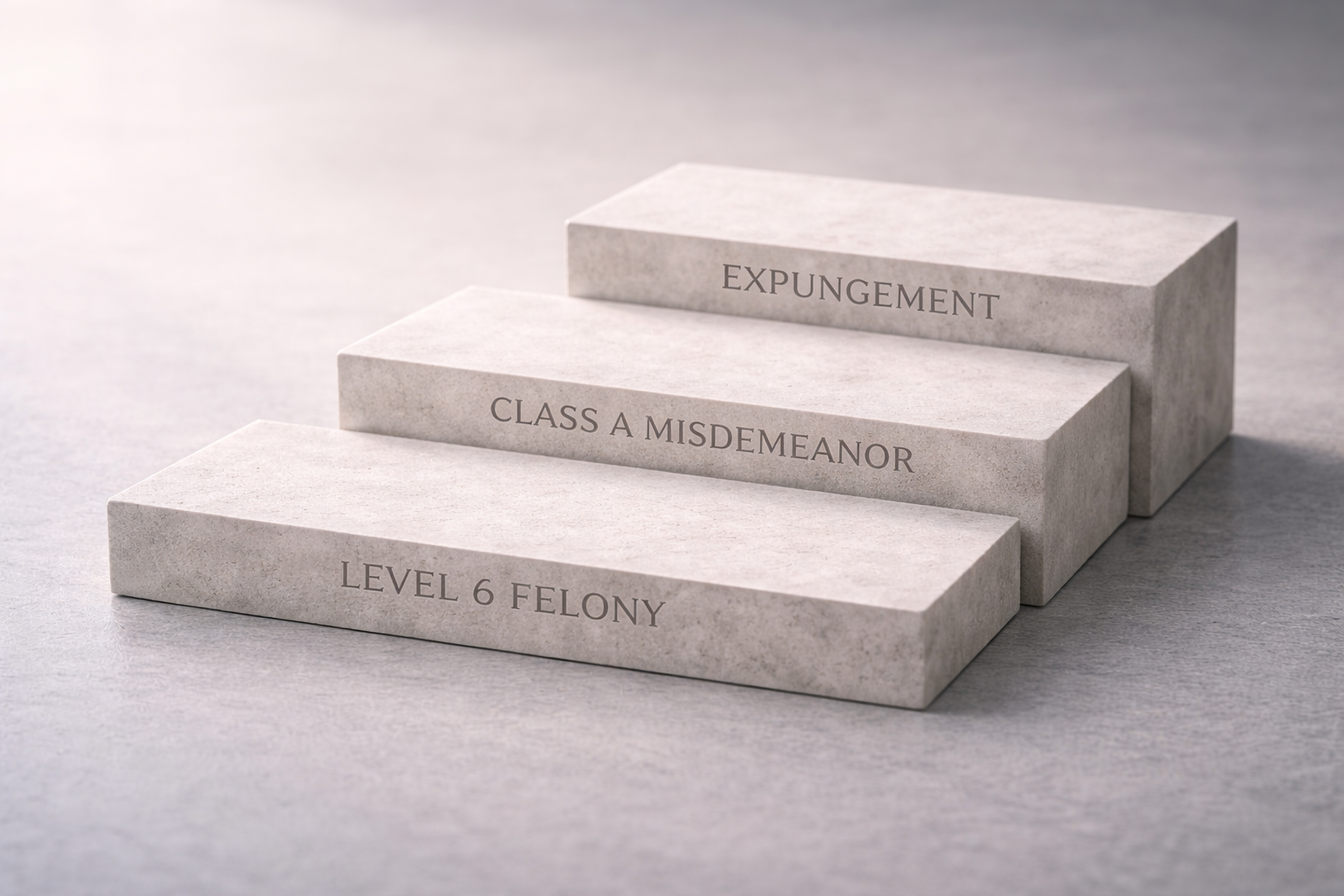
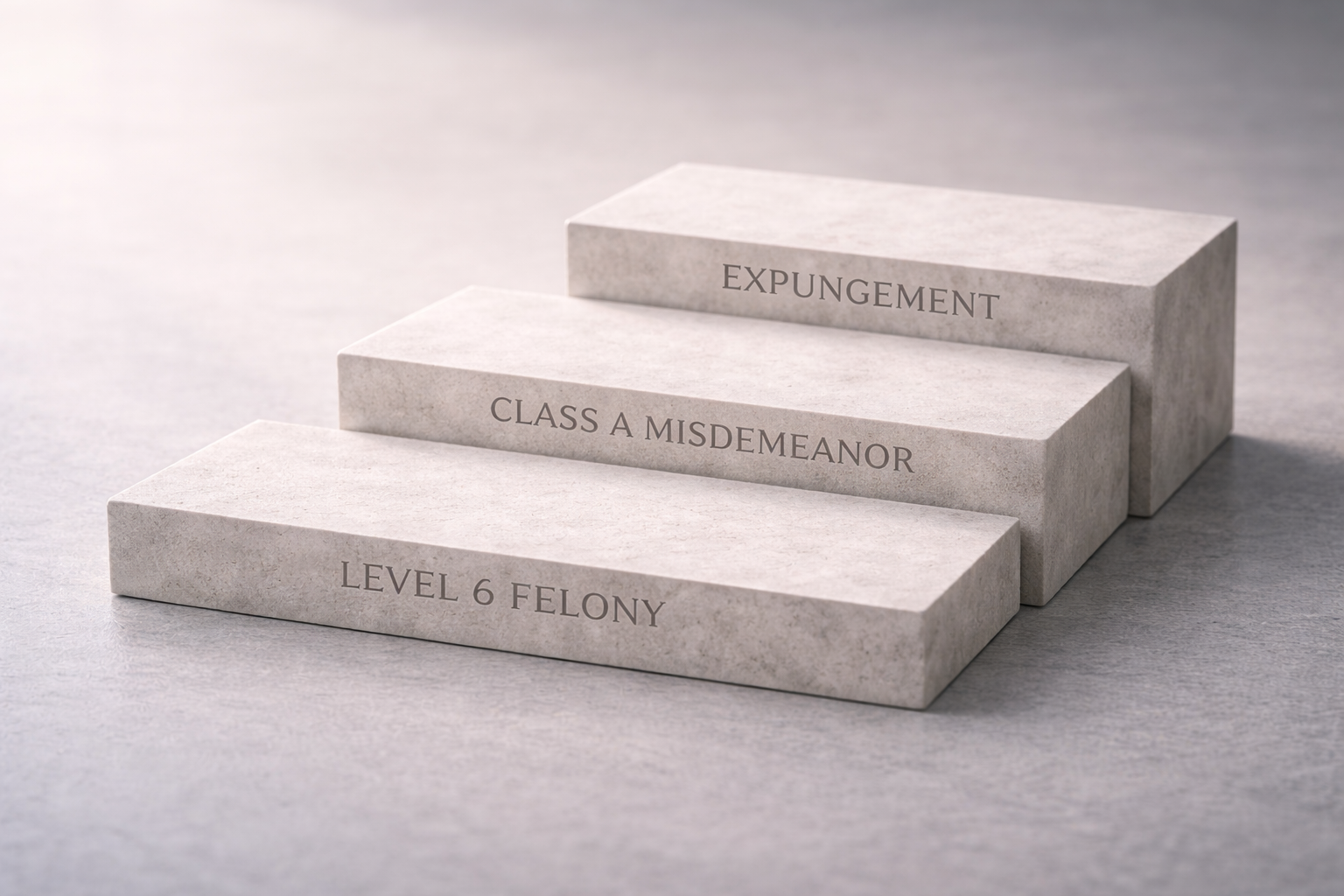
If you're carrying a felony conviction on your record, you may be wondering whether there's a way to minimize its long-term impact. Many people ask: "Can I reduce my felony to a misdemeanor and then expunge it?" The short answer is yes—in some cases. But reduction and expungement are two separate legal processes, each with its own requirements and waiting periods.
Understanding how these processes work together can help you develop a strategic plan to clear your record faster. Here's what you need to know about felony reduction and expungement in Indiana.
Step One: Can a Felony Be Reduced in Indiana?
Indiana law allows certain felonies to be reduced to misdemeanors under specific circumstances. This process is governed primarily by Indiana Code § 35-50-2-7, which applies to Level 6 felonies (and older Class D felonies committed before July 1, 2014).
When Can a Level 6 Felony Be Reduced?
Under IC 35-50-2-7, the court has two opportunities to convert a Level 6 felony to a Class A misdemeanor:
At Sentencing (Subsection c): The court may enter judgment of conviction as a Class A misdemeanor at the time of sentencing. This is discretionary—the court is not required to do so. The court must provide detailed reasons for its decision in the record.
After Sentencing (Subsection d): After you've completed your sentence, you may file a verified petition asking the court to convert your Level 6 felony conviction to a Class A misdemeanor. This post-sentencing reduction requires you to meet several conditions:
At least three years have passed since you completed your sentence and satisfied all obligations
You are not a sex or violent offender
The felony did not result in bodily injury to another person
You have not been convicted of perjury or official misconduct
You have not been convicted of domestic battery as a Level 6 felony within the past 15 years
You have not been convicted of any felony since completing your sentence
No criminal charges are currently pending against you
If these conditions are met, the court holds a hearing (after notifying the prosecuting attorney) and decides whether to grant the reduction.
What About Older Class D Felonies?
If your conviction was for a Class D felony (committed before July 1, 2014), the same statute applies. The legal framework is nearly identical—the court may reduce a Class D felony to a Class A misdemeanor either at sentencing or after you've completed your sentence and met the statutory requirements.
Court Discretion Matters
It's important to understand that felony reduction is largely discretionary. Even if you meet all the statutory requirements, the court still has the authority to deny your petition. The court will consider factors such as your overall conduct since the conviction, your employment history, any rehabilitation efforts, and whether the prosecuting attorney objects.
What Happens After a Felony Is Reduced?
When the court grants a petition to reduce your felony to a misdemeanor, your conviction is legally reclassified. This means:
Your criminal record is updated to reflect a Class A misdemeanor conviction instead of a Level 6 felony
The court issues an amended judgment
The Indiana State Police central repository updates its records accordingly
Reducing your felony to a misdemeanor can have immediate benefits, including improved employment prospects and eligibility for certain professional licenses. But the conviction is still on your record—it's just now a misdemeanor conviction. To remove it from public view entirely, you'll need to pursue expungement.
Step Two: Expungement After Felony Reduction
Once your felony has been reduced to a misdemeanor, you become eligible to seek expungement under the rules governing misdemeanor convictions. This is where the strategy becomes powerful.
Misdemeanor Expungement Rules
Misdemeanor expungements in Indiana are governed by Indiana Code § 35-38-9-2. Under this statute:
You must wait at least five years from the date of conviction (unless the prosecuting attorney consents in writing to a shorter period)
You must file your petition in the county where the conviction occurred
You must demonstrate that:
The required waiting period has elapsed
No charges are currently pending against you
You have paid all fines, fees, court costs, and restitution
You have not been convicted of any crime within the previous five years
Critically, if you meet these requirements, the court shall order your records expunged. This is mandatory—the court has no discretion to deny your petition if you satisfy all statutory conditions.
Why Reduction Helps: Shorter Wait, Mandatory Relief
Here's why the reduction-then-expungement strategy can be so effective:
Shorter Waiting Period: A Level 6 felony that has not been reduced requires an eight-year waiting period under IC 35-38-9-3. By contrast, a misdemeanor (including a reduced felony) requires only a five-year waiting period under IC 35-38-9-2. That's three years sooner.
Mandatory vs. Discretionary: Expungement of a Level 6 felony is mandatory if statutory conditions are met. But if your felony involved bodily injury, perjury, official misconduct, or other excluded offenses, you'd be forced to seek expungement under IC 35-38-9-4 or 35-38-9-5—which are discretionary and may require the prosecuting attorney's consent. Once your conviction is reduced to a misdemeanor, you avoid those higher-level discretionary standards entirely.
How Is the Waiting Period Calculated?
According to guidance from the Indiana Courts, the five-year waiting period for a reduced felony begins on the original date of conviction—not on the date the felony was reduced. For example, if you were convicted of a Level 6 felony in 2018 and the court reduced it to a misdemeanor in 2022, your five-year clock started running in 2018. You could file for expungement in 2023.
When a Felony Cannot Be Reduced
Not every felony is eligible for reduction. Indiana law specifically excludes certain offenses and circumstances:
Higher-Level Felonies: Only Level 6 felonies (and older Class D felonies) may be reduced under IC 35-50-2-7. Level 5 felonies and above cannot be converted to misdemeanors through this process.
Excluded Offenses: Even for Level 6 felonies, certain convictions are ineligible for reduction, including:
Domestic battery as a Level 6 felony
Possession of child sex abuse material
Any felony resulting in bodily injury to another person
Perjury or official misconduct
Prior Felony Misdemeanor Conversions: If you previously had a felony reduced to a misdemeanor and you committed another felony within three years, the court is required to enter judgment as a felony for the second offense.
Sex and Violent Offenders: If you are classified as a sex or violent offender under Indiana law, you are not eligible for post-sentencing felony reduction.
Strategic Considerations
Timing
Should you file for reduction immediately after completing your sentence, or should you wait? The answer depends on your circumstances:
If you're still within the three-year period since completing your sentence, filing for reduction now can start the clock ticking on your expungement waiting period.
If five years have already passed since your original conviction, it may make sense to pursue both reduction and expungement simultaneously or in close succession.
Multi-County Cases
Indiana's expungement law requires that you consolidate all convictions from the same county into one petition. If you have convictions in multiple counties, you must file a separate petition in each county—but you have a 365-day window to file all petitions. Failing to file all eligible petitions within that window may forfeit your right to expunge additional convictions later.
If you're pursuing reduction and expungement across multiple counties, careful timing and coordination are essential.
Prosecutor Objections
The prosecuting attorney has the right to object to both your petition for felony reduction and your petition for expungement. While objections do not automatically result in denial, they can complicate your case. Common grounds for objection include:
Concerns about public safety
The nature and circumstances of the offense
Your conduct since the conviction
Outstanding restitution or victim concerns
An experienced Indiana expungement lawyer can anticipate and respond to these objections effectively.
Common Misconceptions
"All felonies can be reduced."
Only Level 6 felonies (and older Class D felonies) are eligible for reduction under IC 35-50-2-7. Higher-level felonies cannot be converted to misdemeanors through this process.
"If it's reduced, it automatically disappears."
Reduction changes the classification of your conviction from a felony to a misdemeanor, but it does not remove the conviction from your record. You must still file a separate petition for expungement.
"I can file expungement anytime after reduction."
You must still satisfy the five-year waiting period (calculated from the original date of conviction), pay all fines and restitution, and meet all other statutory requirements before filing for expungement.
What Happens at the Hearings?
Felony Reduction Hearing
At a felony reduction hearing under IC 35-50-2-7(d), the court will:
Review your compliance with the terms of your sentence
Consider evidence of your rehabilitation (employment, education, community involvement)
Hear objections from the prosecuting attorney, if any
Evaluate whether granting the reduction serves the interests of justice
The court's decision is discretionary. Be prepared to present evidence of your positive conduct since the conviction.
Expungement Hearing (If Required)
For misdemeanor expungements under IC 35-38-9-2, if the prosecuting attorney does not object or waives objection, the court may grant your petition without a hearing. If the prosecutor does object, the court will schedule a hearing, and you must prove by a preponderance of the evidence that you meet all statutory requirements. If you do, the court must grant your petition.
Practical Example Scenario
Consider this timeline:
2018: You are convicted of a Level 6 felony and placed on probation.
2021: You successfully complete probation and satisfy all conditions of your sentence.
2024: You file a verified petition under IC 35-50-2-7(d) to reduce your conviction to a Class A misdemeanor. The court grants your petition.
2023 (or sooner): Because five years have passed since your original 2018 conviction, you immediately file for expungement under IC 35-38-9-2. The court orders your records sealed.
Result: Your conviction is removed from public view, and you can truthfully state in most employment applications that you have not been convicted of a crime.
When Should You Speak with an Indiana Expungement Lawyer?
Navigating felony reduction and expungement requires a clear understanding of Indiana law, careful attention to deadlines, and strategic planning. You should consult an experienced Indiana expungement lawyer if:
You have a Level 6 felony or older Class D felony on your record
You are unsure whether reduction is possible in your case
You have convictions in multiple counties
You want to shorten your waiting period strategically
The prosecuting attorney has objected to your petition
You need guidance on calculating waiting periods or consolidating petitions
Ready to take the next step? Call or text (317) 759-3225 or schedule an appointment below. An Indiana expungement lawyer can review your record, assess your eligibility for reduction and expungement, and help you develop a clear path forward.



Reading about the problem is one thing. Dealing with it is another.
If this issue is affecting you, your family, your case, or your career, the next step is understanding how the law applies to the facts in front of you. Tell us what is happening and Vining Legal can help you determine what needs attention next.
We personally respond within 2 hours, 8am–8pm, seven days a week.
Vining Legal · Indianapolis, Indiana
Family Law · DCS · Criminal Defense · Appeals
