What Is the Child Protection Index and How Do You Get Off It?
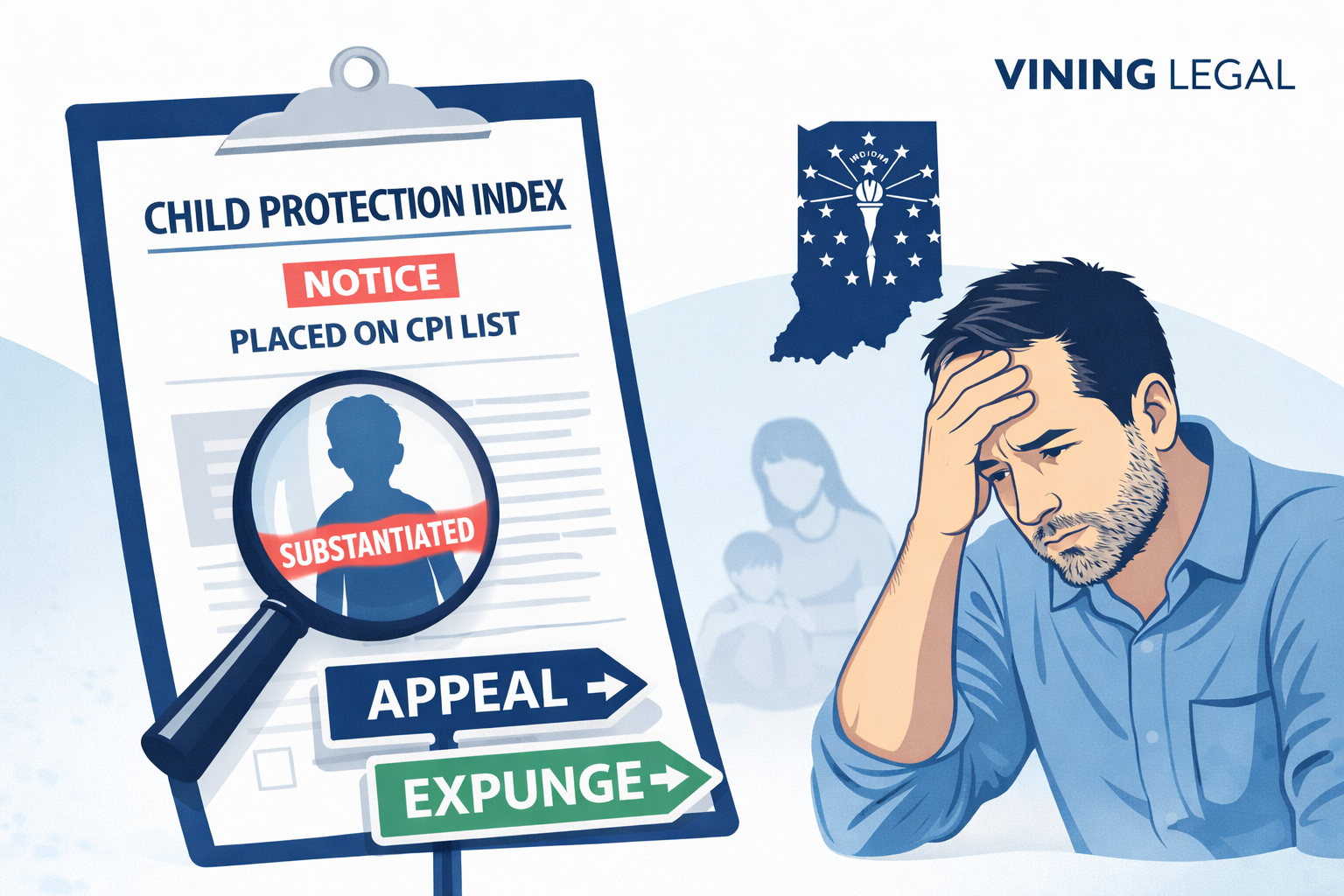
Finding out you're listed on Indiana's Child Protection Index (CPI) often happens suddenly—during a background check for a new job, when applying for a professional license, or in the middle of a custody dispute. The notification can be alarming, especially if you weren't aware of the listing or if you believed the matter had been resolved.
Being on the CPI can impact your ability to work in schools, healthcare facilities, childcare centers, or as a foster parent. It can influence custody decisions and create barriers in professional licensing. Understanding what the CPI is, how you got on it, and—most importantly—how to get off it is essential to protecting your future.
The good news? Being listed on the Child Protection Index is not always permanent. With the right strategy and timely action, you may be able to challenge your listing or have it expunged.
What Is the Child Protection Index?
The Child Protection Index is Indiana's centralized database of substantiated child abuse and neglect findings. Maintained by the Indiana Department of Child Services (DCS) under Indiana Code § 31-33-26, the CPI replaced the former State Central Registry and Central Client Index in 2006.
The CPI serves as a tool for agencies conducting background checks on individuals who work with children or vulnerable populations. When DCS completes an investigation and determines that abuse or neglect occurred, the alleged perpetrator's name is entered into this database.
Understanding the CPI's purpose helps clarify why it exists: to protect children by identifying individuals with substantiated findings. However, the system is not infallible, and substantiations can sometimes be based on incomplete information, misunderstandings, or circumstances that have since changed.
How Do You Get Placed on the CPI?
DCS Investigation Process
Placement on the CPI begins with a report to the DCS Child Abuse Hotline. This report can come from mandated reporters (teachers, doctors, social workers) or concerned community members. Once a report is made, DCS conducts an assessment to determine whether abuse or neglect occurred.
At the conclusion of the assessment, DCS classifies the report as either "substantiated" or "unsubstantiated." A substantiated finding means DCS believes, based on a preponderance of the evidence, that abuse or neglect occurred. This is a lower standard than the "beyond a reasonable doubt" standard used in criminal cases.
Notice and Administrative Process
Within 30 days of entering a substantiated report into the CPI, DCS must notify the alleged perpetrator and the child's parent, guardian, or custodian. According to Indiana Code § 31-33-26-8, this notice must include:
Confirmation that the report has been classified as substantiated
Information about the right to request an administrative hearing
The deadline to request a hearing (30 days from the date the notice is served)
The notice typically includes a redacted copy of the Assessment of Child Abuse and Neglect (Form 311) and a Request for Administrative Appeal Hearing form.
Timing is critical. If you fail to request a hearing within 30 days, you may lose your right to challenge the substantiation unless you can demonstrate excusable neglect or fraud.
What Does Being on the CPI Mean?
Employment Consequences
CPI listings appear on background checks required for positions involving children or vulnerable populations. This includes:
Schools: Teachers, administrators, coaches, and support staff
Healthcare: Nurses, home health aides, and therapists working with children
Childcare: Daycare workers, preschool teachers, and nannies
Foster Care: Prospective foster or adoptive parents
Many employers in these fields are required to conduct CPI checks. A substantiated finding may result in denial of employment or termination from a current position.
Professional Licensing Impact
Licensed professionals such as nurses, teachers, therapists, and social workers may face disciplinary action from their licensing boards if listed on the CPI. Some licensing boards require self-reporting of CPI listings, and failure to disclose can result in additional penalties.
Even if the substantiation didn't result in criminal charges, the listing alone can trigger a licensing investigation or jeopardize license renewal.
Family Court and Custody Consequences
CPI listings frequently surface in child custody disputes. If you're involved in a Child in Need of Services (CHINS) proceeding under Indiana Code § 31-34, a substantiated finding can influence the court's decisions about placement, parenting time, and services.
In divorce or custody modifications, the opposing party may use a CPI listing to argue that you pose a risk to the child, potentially affecting custody arrangements or visitation rights.
How Do You Get Off the Child Protection Index in Indiana?
Administrative Appeal
The most direct way to challenge a CPI listing is through an administrative appeal. Under Indiana Code § 31-33-26-8, you have 30 days from the date the substantiation notice is served to request an administrative hearing.
This hearing is conducted by an Administrative Law Judge (ALJ) who reviews the evidence DCS relied upon to substantiate the report. You have the right to:
Present evidence and witnesses
Cross-examine DCS witnesses
Challenge the sufficiency of the evidence
Argue that the finding was incorrect
The ALJ issues a recommendation, and the Final Adjudicating Authority (FAA) of DCS makes the final decision. If the FAA determines the report should be unsubstantiated, DCS must expunge your name from the CPI within 10 business days.
Strategic Consideration: If a Child in Need of Services case or criminal charges are pending based on the same facts, your administrative appeal may be stayed until the court resolves those proceedings. However, requesting the appeal preserves your rights.
Expungement of Substantiation
If you missed the 30-day deadline for an administrative appeal, or if circumstances have changed since the substantiation, you may petition a court for expungement under Indiana Code § 31-33-27-5.
An individual identified as a perpetrator in a substantiated report may file a petition with the court exercising juvenile jurisdiction in the county where they reside. The court will consider whether the probative value of the documentation no longer justifies its retention in DCS records.
Factors that may support expungement include:
Significant time has passed since the incident
You have completed services or treatment
There have been no subsequent reports or concerns
The original finding was based on limited or questionable evidence
Upon receiving a court order for expungement, DCS must expunge the record within 10 business days.
Judicial Review
If an Administrative Law Judge recommended that your substantiation be upheld and the FAA agreed, you may have the right to seek judicial review in the courts. This process involves asking a court to review the administrative decision for legal errors or lack of substantial evidence.
Judicial review requires strict adherence to procedural requirements and deadlines. Consulting an attorney experienced in DCS matters is essential if you're considering this option.
Common Mistakes People Make
Ignoring the Substantiation Notice
Many people receive the notice and assume it will go away on its own or that it's not important if no criminal charges were filed. Ignoring the notice means forfeiting your right to challenge the finding through the administrative process.
Missing Appeal Deadlines
The 30-day deadline to request an administrative hearing is strict. Missing this deadline can result in permanent placement on the CPI unless you can prove excusable neglect or fraud—a difficult standard to meet.
Participating in Interviews Without Understanding Consequences
During a DCS investigation, anything you say can be used to support a substantiation. Many people cooperate fully without realizing that their statements may be interpreted in ways that harm their case. Consulting an attorney before speaking with DCS can help you understand your rights and avoid inadvertently providing damaging information.
Assuming Criminal Dismissal Automatically Removes CPI Listing
Even if criminal charges related to the same incident are dismissed or you're found not guilty, the CPI listing remains unless you take affirmative steps to challenge or expunge it. The criminal and administrative processes operate independently, and success in one does not guarantee success in the other.
Strategic Considerations
Immediate Appeal vs. Later Expungement
If you're within the 30-day window, requesting an administrative appeal is generally the best course of action. This allows you to challenge the substantiation while the evidence is fresh and witnesses are available.
If the deadline has passed, pursuing expungement may be your only option. However, expungement requires demonstrating that the listing no longer serves a protective purpose, which can be more challenging than contesting the initial finding.
How CPI Issues Intersect With CHINS or Criminal Cases
If a CHINS petition or criminal charges are filed based on the same facts as the substantiation, your administrative appeal will likely be stayed. However, the outcome of the court case can impact your CPI listing:
If the court finds that abuse or neglect did not occur, DCS must expunge the CPI entry within 10 business days
If you're convicted of charges based on the substantiated conduct, your request for administrative review may be dismissed
If an Informal Adjustment is filed and later completed, DCS will reactivate the administrative review process if you requested it timely
Coordinating your defense strategy across all proceedings is critical. An attorney can help you navigate these overlapping systems and protect your rights at each stage.
Importance of Coordinating Defense Strategy
Because CPI listings affect employment, licensing, and family relationships, your approach should be comprehensive. This may involve:
Requesting and reviewing all DCS records
Gathering evidence and witness statements
Consulting with medical or psychological experts if applicable
Preparing for cross-examination of DCS caseworkers
Developing a narrative that explains the circumstances accurately
When Should You Contact an Attorney?
Immediately After Receiving Substantiation Notice
Time is your most valuable resource. The 30-day deadline to request an administrative hearing starts running the moment you're served with the substantiation notice. Contacting an attorney immediately ensures you don't miss critical deadlines and allows for thorough preparation.
Before Responding to DCS
If you're currently under investigation or have been contacted by DCS, consulting an attorney before providing statements can protect your rights. An attorney can advise you on what information to share, what questions to answer, and how to avoid unintentionally harming your case.
If a Job or License Is at Risk
If you've been denied employment, terminated, or received notice of a licensing investigation due to a CPI listing, an attorney can help you understand your options and develop a strategy to minimize the impact on your career.
Protecting Your Rights and Your Future
Being listed on Indiana's Child Protection Index can feel overwhelming, but it doesn't have to define your future. Whether you're challenging a recent substantiation or seeking expungement of an older finding, taking prompt and strategic action is essential.
Understanding the CPI process, recognizing the deadlines, and avoiding common mistakes can make the difference between a permanent listing and successful removal. With the right legal guidance, you can protect your rights, your family, and your livelihood.
If you've received a substantiation notice or discovered you're on the CPI, don't wait. Contact an attorney experienced in DCS matters to discuss your options and develop a plan to move forward.


Reading about the problem is one thing. Dealing with it is another.
If this issue is affecting you, your family, your case, or your career, the next step is understanding how the law applies to the facts in front of you. Tell us what is happening and Vining Legal can help you determine what needs attention next.
We personally respond within 2 hours, 8am–8pm, seven days a week.
Vining Legal · Indianapolis, Indiana
Family Law · DCS · Criminal Defense · Appeals
